What Is a Skeleton Watch? (Simple Definition)
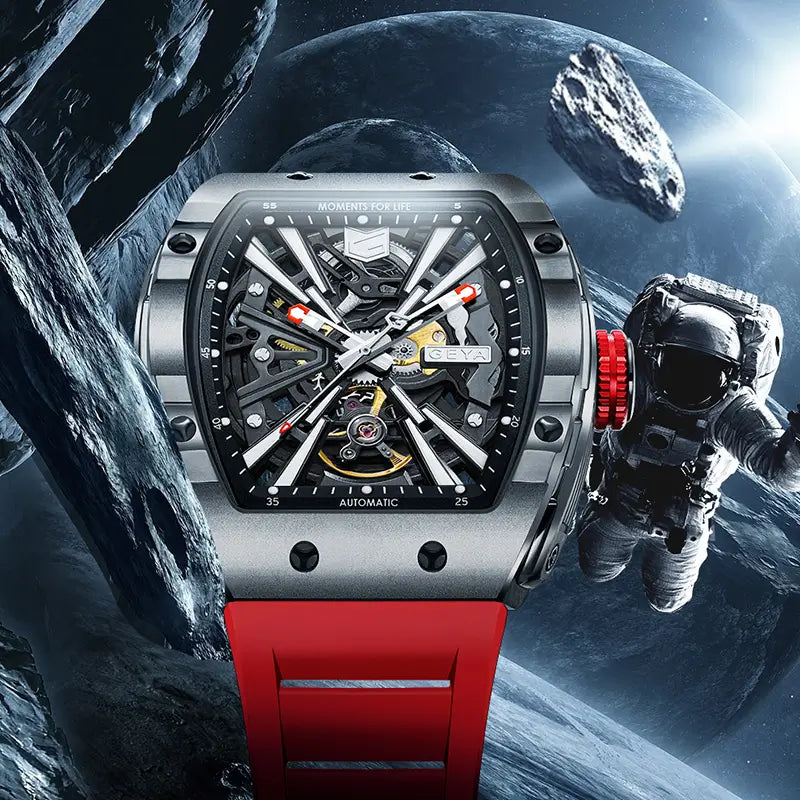
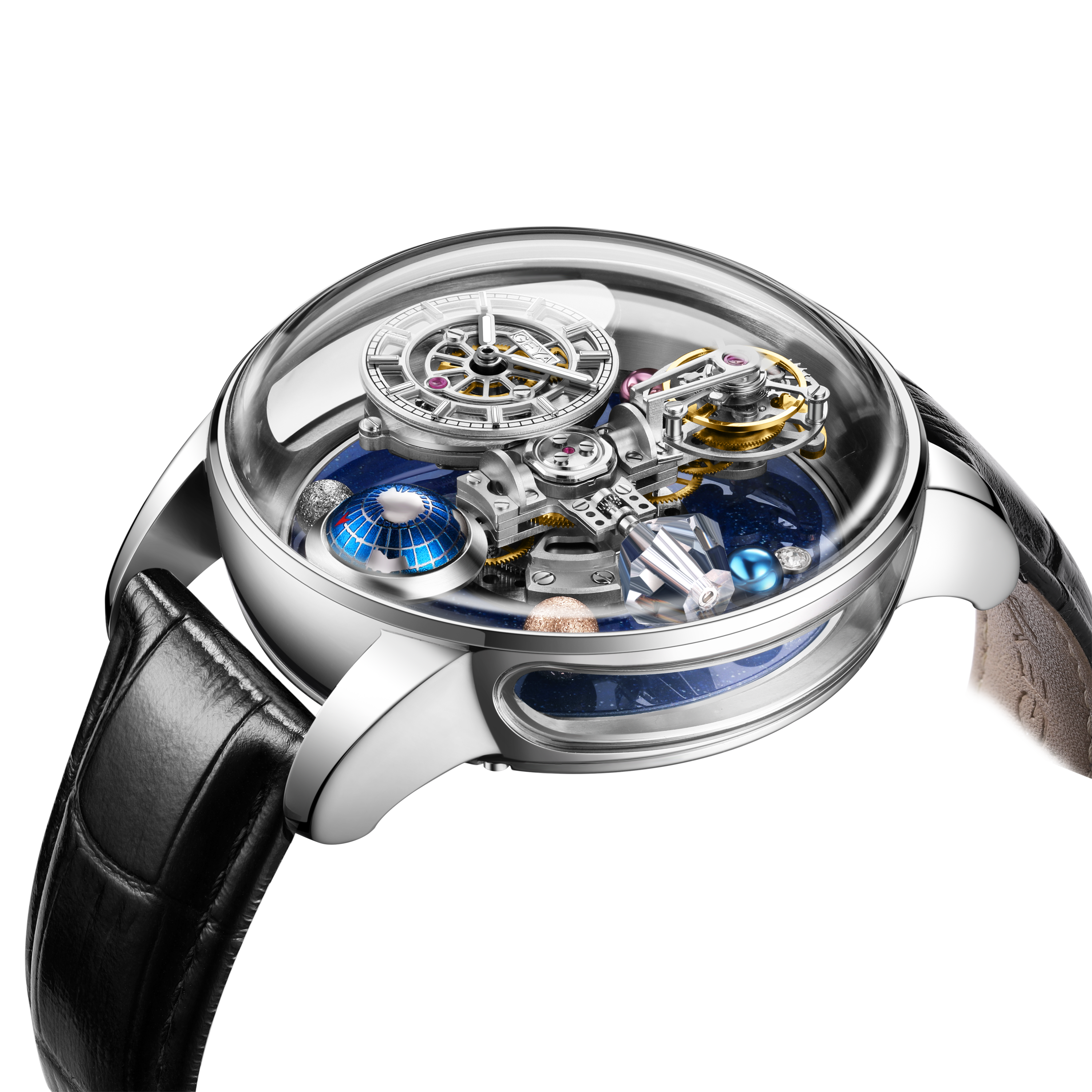
A skeleton watch is a mechanical watch where the dial has been removed or cut away to expose the movement beneath. The name comes from "skeletonizing" — stripping a watch of its opaque dial to reveal its mechanical "bones."
Key characteristics:
- ✅ Visible gears, springs, and escapement — you see the watch working
- ✅ Often features an exhibition case back — so you can see the movement from both sides
- ✅ Always mechanical (automatic or hand-wound) — quartz watches have nothing to show off
- ✅ Can range from subtle (just a small cutout) to extreme (fully skeletonized, no dial at all)
Think of it like a car with a transparent hood. Why hide the engine when it's beautiful?
Skeleton vs Open-Heart: What's the Difference?
People often confuse these two, and for good reason — they're related. Here's the breakdown:
| Feature | Skeleton Watch | Open-Heart Watch |
|---|---|---|
| Dial | Mostly or entirely removed | Mostly intact, with a cutout window |
| What you see | Entire gear train | Just the balance wheel / escapement |
| Aesthetic | Bold, industrial, conversation-starter | Subtle, refined, a "peek" rather than full reveal |
| Legibility | Can be harder to read (no solid dial) | Easy to read (dial is mostly there) |
| Best for | Watch enthusiasts, collectors, people who want to make a statement | Daily wear, first-time mechanical watch buyers |
Bottom line: Skeleton = full reveal. Open-heart = a tasteful window. GEYA makes both, so you can choose your level of transparency.
Why People Love Skeleton Watches
1. The Mechanical Theater
There's something deeply satisfying about watching a mechanical movement in action. The rhythmic oscillation of the balance wheel. The smooth sweep of the seconds hand. The hypnotic rotation of a planetary flywheel. A skeleton watch turns telling time into an experience.
2. It's a Conversation Starter
Wear a skeleton watch to a meeting, a dinner, a date — someone will ask about it. It's the most social watch style there is.
3. Craftsmanship on Display
A skeleton watch is a statement that you appreciate engineering. It says: I didn't buy this because it was the cheapest option. I bought it because I understand what's inside.
4. Every One Looks Unique
No two skeleton watches are identical in how the movement is exposed. Different brands skeletonize differently — some cut away geometric patterns, others go fully transparent. Your skeleton watch is one of a kind.
How to Choose a Skeleton Watch: 4 Things to Check
1. Movement Quality
Just because you can see it doesn't mean it's good. Look for:
- Smooth seconds hand sweep (no visible ticking)
- Decorated movement plates (Geneva stripes, perlage, blued screws)
- Known movement caliber — Japanese (Miyota, Seiko) and Chinese (Seagull, Hangzhou) movements are reliable and affordable
2. Case Material & Finish
- Stainless steel — the standard, durable and classy
- Carbon fiber — lighter, modern, motorsport vibe
- Black PVD coating — sleek and stealthy
3. Legibility
A fully skeletonized dial can be hard to read at a glance. If you care about telling time quickly, choose a model with prominent hands and hour markers — or go with an open-heart instead.
4. Strap Options
- Stainless steel bracelet — formal, durable
- Leather strap — classic dress watch feel
- Silicone/rubber — sporty, casual, comfortable
Many skeleton watches (including GEYA's) use standard lug widths, so you can swap straps in seconds.
The Best Skeleton Watches Under $500 (That Don't Look Cheap)
Honest truth: skeleton watches exist at every price point. But the sub-$200 market is flooded with poorly-finished AliExpress clones that look impressive in photos but disappoint in person.
At the $300-$500 level, you get:
- ✅ Visible movement decoration — not just bare metal
- ✅ Sapphire crystal — scratch-resistant glass on both sides
- ✅ Stainless steel construction — not chrome-plated alloy
- ✅ Genuine automatic movement — not a quartz with a fake skeleton overlay
GEYA's skeleton collection sits right in this sweet spot. Our G78193 Rainbow Zircon Skeleton combines a fully-exposed automatic movement with hand-set rainbow zircons on the bezel — jewelry-grade finishing at watch-enthusiast pricing.
FAQ: Skeleton Watches
Q: Do skeleton watches need batteries?
No. All skeleton watches are mechanical — either automatic (self-winding via wrist motion) or hand-wound. No batteries, ever.
Q: Are skeleton watches fragile?
Not inherently. A well-made skeleton watch with a sapphire crystal and stainless steel case is just as durable as any other mechanical watch. However, because the dial is open, impacts that might hide behind a solid dial are more visible — so treat it with reasonable care.
Q: Can you wear a skeleton watch daily?
Absolutely. A dark-dial skeleton or open-heart watch is versatile enough for daily wear. Full skeleton watches with lighter dials lean more "statement piece" — perfect for weekends, evenings, and occasions.
Q: What's the difference between a skeleton watch and a tourbillon?
A skeleton watch shows the movement. A tourbillon is a specific complication — a rotating cage that holds the escapement, designed to improve accuracy by countering gravity. Some watches are both skeleton and tourbillon — you see the tourbillon rotating through the open dial. GEYA's Tourbillon Series features exactly this combination.
Is a Skeleton Watch Right for You?
Get a skeleton watch if:
- You love mechanical engineering and want to see it work
- You enjoy when people notice what's on your wrist
- You want a timepiece that's as much art as it is function
Skip it and go open-heart (or solid dial) if:
- You need to tell the time at a split-second glance
- Your style is ultra-minimalist
- You work in a very conservative profession where flashy watches are frowned upon
Still unsure? Browse GEYA's full watch collection — we have everything from fully skeletonized to classic solid-dial designs. All with automatic movements, free worldwide shipping, and 2-year warranty.